
[Daily-Use Water Support for the 2026 Kumamoto Earthquake] As Water Service Restoration Progresses, WOTA Partners with Local Facilities to Launch “Minna no Shower” (Everyone’s Shower)—Bathing Support Open to the Local Community for Those Still Lacking Adequate Access to Bathing Facilities
— Meeting daily-use water needs, including those of households sheltering at home or in vehicles, with showers available by online reservation; release of “WOTA 2026 Kumamoto Earthquake Response Fact Sheet (Fourth Preliminary Report)” —
WOTA extends its heartfelt sympathies to all those affected by the 2026 Kumamoto Earthquake.
Following the 2026 Kumamoto Earthquake, WOTA Corp. (Headquarters: Chuo-ku, Tokyo; Representative Director & CEO: Yosuke Maeda; hereinafter “WOTA”) began providing daily-use water support at evacuation centers and other sites in areas affected by water outages after receiving an official request from Kumamoto Prefecture. WOTA has since expanded its support to medical and welfare facilities, children’s facilities, childcare facilities, and other sites.
While water service restoration progresses following the July 28 Kumamoto Earthquake, Yatsushiro City, Uki City, and Hikawa Town still have households experiencing water outages, households sheltering at home or in vehicles, and residents unable to secure sufficient daily-use water for bathing, handwashing, and other needs because of damage to hot water equipment, wells, or simplified water supply systems, among other problems.
During large-scale disasters, evacuation centers face capacity limits. To avoid concentrating evacuees at evacuation centers and enable affected residents to continue living at home or in their communities as much as possible, it is also important to secure local access to daily-use water—including water for bathing and handwashing—in addition to providing food and drinking water.
In response to these conditions, WOTA partnered with local facilities to launch “Minna no Shower” (Everyone’s Shower)—a bathing support service open to the local community that provides access to showers for these residents.
Concurrently, WOTA released its latest Fact Sheet summarizing overall daily-use water support operations for the 2026 Kumamoto Earthquake to date.
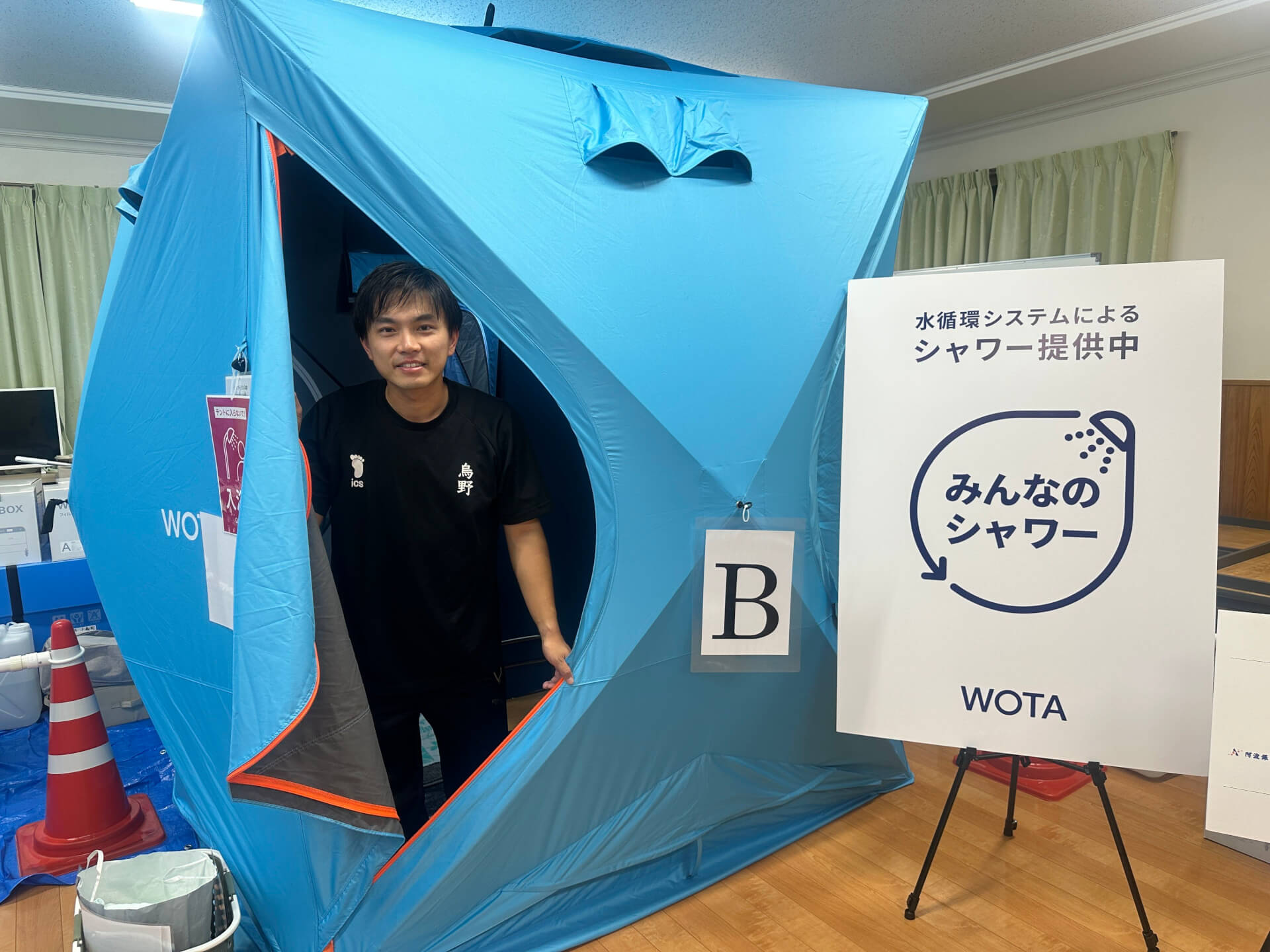
Partnering with a Childcare Facility in Uki City to Launch “Minna no Shower” Bathing Support Service Open to the Local Community
■Background:
As the first month since the Kumamoto Earthquake draws to a close, the number of households without water in Kumamoto Prefecture has fallen from a post-earthquake peak of approximately 108,000 to around 2,000 as restoration work progresses (*1).
However, access to daily-use water—including water for bathing and handwashing—is not recovering at the same pace as the decline in the number of households without water. Households with persistent water outages remain in Yatsushiro City, Uki City, and Hikawa Town, along with households whose homes are habitable but that lack hot water because of damage to hot water equipment or cannot access daily-use water because of damaged wells or simplified water systems. Additionally, some residents continue sheltering in vehicles or other temporary accommodation because of housing damage (*2).
Thus, challenges in securing bathing facilities persist in ways that the decline in the number of households without water alone cannot capture.
A childcare facility in Uki City, Kumamoto Prefecture, has installed and is operating Water-Recycling Shower “WOTA BOX” units to provide bathing facilities for its children and staff. Even as water service restoration progresses, some nearby residents still lack sufficient access to daily-use water and adequate bathing facilities at home. Upon receiving a request from the facility to “expand support so the local community can also use it,” WOTA launched “Minna no Shower”.
*1 Source: Ministry of Land, Infrastructure, Transport and Tourism (MLIT), “Prospects for Water and Sewage System Restoration in the 2026 Kumamoto Earthquake (Part 1) (As of 10:00 AM, August 26, 2026)”
*2 Source: “WOTA 2026 Kumamoto Earthquake Response Fact Sheet (Fourth Preliminary Report) | Access to Bathing Facilities and Related Challenges”
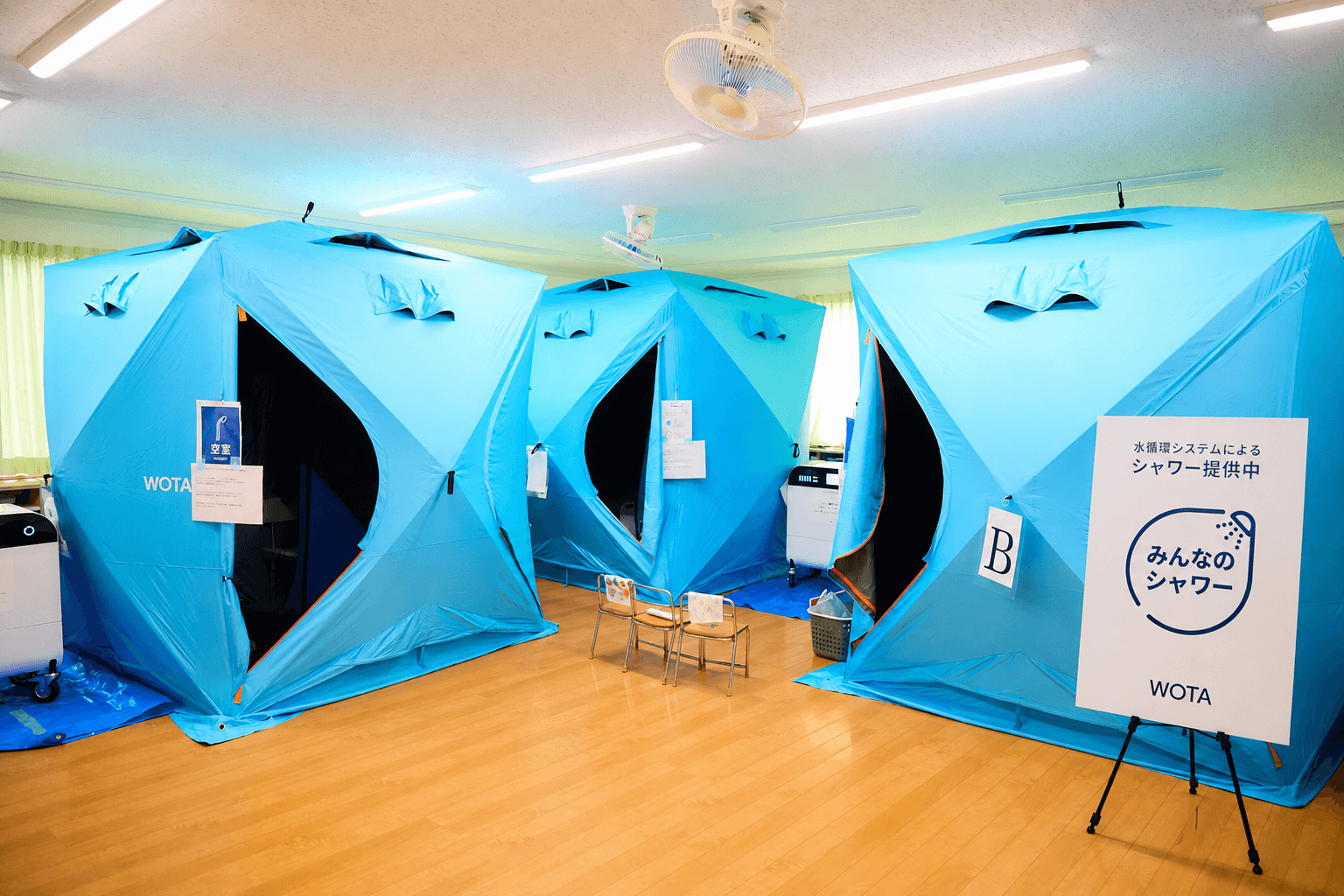
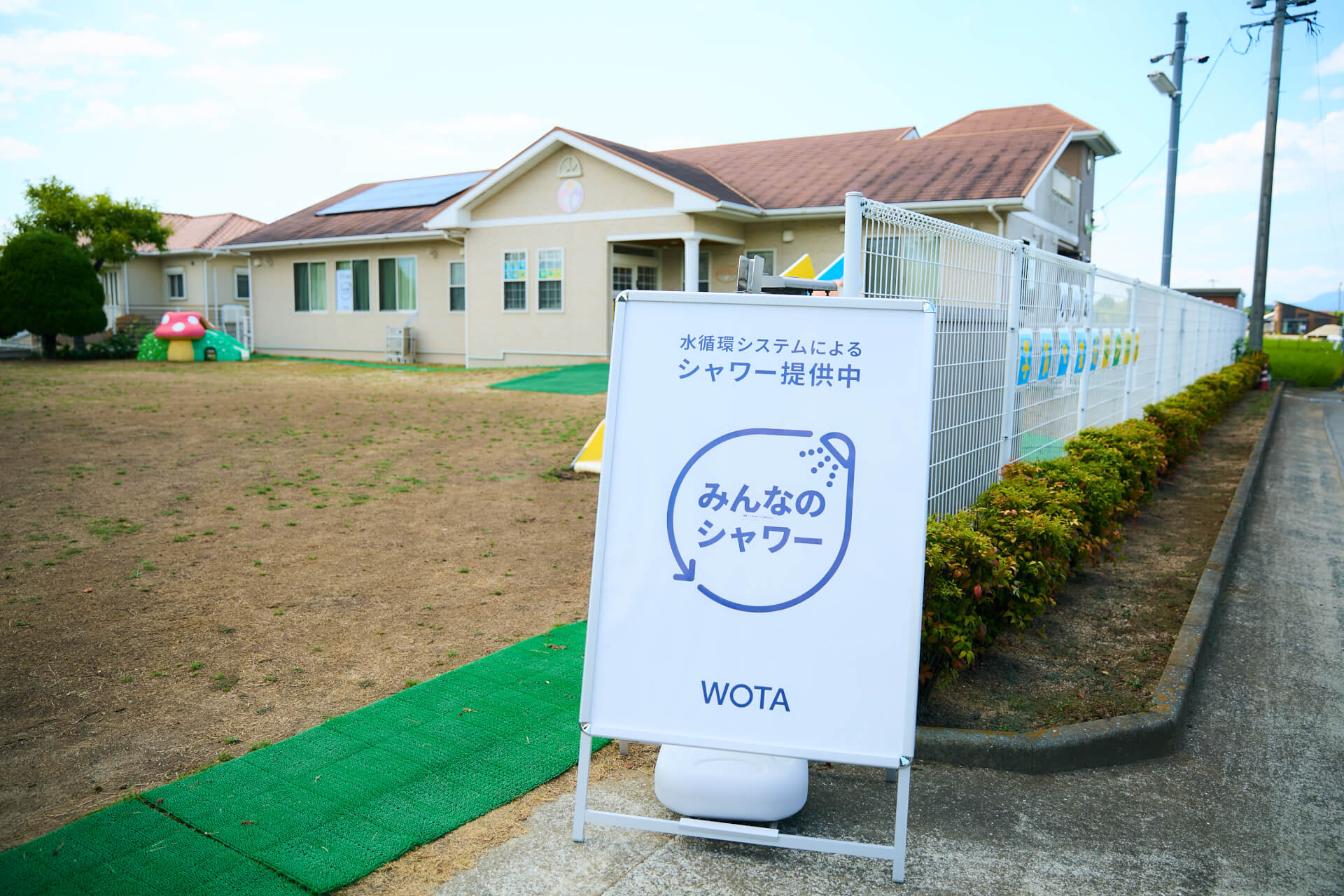
■Childcare Facility Showers Opened to the Community via Online Reservation System
This initiative makes the Water-Recycling Shower “WOTA BOX” units installed at the childcare facility available to local residents who have difficulty accessing bathing facilities. Users check available time slots and, book online, thenand visit the facility at their designated time to use the showers.
Because the units provide private shower stalls, the initiative aims to offer a local option for people with young children and those who find communal bathing at large bathing facilities or similar settings difficult.
■Operated in Partnership with Local Facilities Using Private Funding
In response to the facility’s request , WOTA covers the necessary operational costs using private funding, including sponsorships from companies and other supporters and donations through crowdfunding. While the facility manages day-to-day shower operations, WOTA is responsible for maintenance and operational support, —including equipment delivery, setup, replenishment of consumables such as filters, maintenance, inspections, patrols, and technical support.
■Overview of Operations:
・Target Users: Local who have difficulty accessing bathing facilities, including people sheltering at home or in vehicles
・Location: Shirayuri Nursery School, Uki City, Kumamoto Prefecture
・Operating Hours: 10:00 AM – 9:00 PM (Closed on Sundays)
*Operating hours may vary by day. Please check Instagram for the latest operating hours and reservation status.
・How to Use: Check available time slots on the dedicated page, reserve online, and visit the designated site at the reserved time
・“WOTA BOX” Installed Units: 3 units (Unit count subject to change based on conditions)
・Latest Information: Information on how to reserve and current availability is posted on the Instagram account of Shirayuri Nursery School in Uki City
https://www.instagram.com/ukishi_shirayurihoikuen?igsi=MW4zcWlydjZqaDdpMQ==
■Comment from Principal of the Childcare Facility Operating “Minna no Shower”:
“After the earthquake, “WOTA BOX” units were installed to help maintain hygienic conditions for our children and staff. While water service restoration in surrounding areas is progressing, we still hear from locals who find it difficult to bathe comfortably at home.
As part of the community, our school discussed with WOTA whether we could expand support by making our installed showers available to local residents, which led to launching this initiative.
We hope this effort provides a sense of reassurance and helps community members struggling with bathing access take a step toward regaining their daily routines.”
Release of “WOTA 2026 Kumamoto Earthquake Response Fact Sheet (Fourth Preliminary Report)” Summarizing Emergency Water Supply Support at Evacuation Centers, Medical and Welfare Facilities, and Other Sites
A Total of 225 Units Deployed Across 88 Sites (147 “WOTA BOX” and 78 “WOSH” Units)
Following the 2026 Kumamoto Earthquake, WOTA has been providing emergency water supply support using the Water-Recycling Shower “WOTA BOX” and the Water-Regenerating Handwashing Stand “WOSH” at evacuation centers and other sites in areas affected by water outages, in response to an official request from Kumamoto Prefecture. In response to the prefecture’s formal request for assistance, a total of 142 units from 45 local governments nationwide had been brought together in Kumamoto Prefecture as of August 24 through the wide-area mutual aid framework operated and coordinated by JWAD (Japan Water Association for Disaster). This framework operates under the “Agreement on Wide-Area Mutual Aid for Equipment and Materials for Daily-Use Water in Times of Disasters,” which provides for the mutual sharing of daily-use water equipment and materials held by local governments and other entities nationwide during disasters. The equipment has been deployed in stages to evacuation centers and other sites within Kumamoto Prefecture according to local support needs and is being used to provide bathing and handwashing support. Furthermore, equipment is being deployed in stages to medical and welfare facilities using private funding, including sponsorships from companies and other supporters and donations through crowdfunding.
The newly released Fourth Preliminary Report reflects activities since the Third Preliminary Report (published August 19, 2026). In addition to support for evacuation centers and facilities, it provides a new overview of bathing access and related responses in local communities, including among households sheltering at home or in vehicles. Key updates include:
- Updated total deployment metrics for daily-use water support (bathing and handwashing) as of August 24
- Analysis of daily-use water needs not captured in outage statistics and their impact on the operation of medical and welfare facilities, children’s facilities, childcare facilities, and other facilities
- Newly compiled information on challenges in accessing bathing facilities, including among households sheltering at home or in vehicles
- Details of the launch of “Minna no Shower”, a bathing support service open to the local community
- An update on locally managed operations by the entities responsible for running evacuation centers and other sites
Access the Fact Sheet here:
https://contents.wota.co.jp/hubfs/2026-kumamoto/fact-0827.pdf
Comment from Yosuke Maeda, Representative Director & CEO:
“Since immediately after the disaster, we have worked with the national government, Kumamoto Prefecture and its municipalities, supporting local governments, the Self-Defense Forces, DMAT, companies and organizations, and everyone managing operations on the ground to provide daily-use water support at evacuation centers, medical and welfare facilities, children’s facilities, childcare facilities, and other sites. I extend my deepest gratitude to everyone involved.
Even as water service restoration advances, some people remain unable to secure sufficient daily-use water, including water for bathing and handwashing, because of damage to hot water equipment, wells, simplified water supply systems, or their homes, among other problems. During large-scale disasters, it is important not only to improve living conditions at evacuation centers but also to help affected residents continue living at home or in their communities without having to move to evacuation centers. “Minna no Shower” was launched in response to a request from the facility to extend support to the wider community, providing access to bathing facilities close to where residents live.
While listening to feedback from the field, we will assess the effectiveness of this initiative as a model of daily-use water support for people sheltering at home. We will also use the results achieved and challenges identified through this initiative to help build a framework for delivering the daily-use water support needed during disasters more rapidly and reliably.
Sustaining and Expanding Bathing and Hygiene Support Through Crowdfunding for Medical and Welfare Facilities Facing Ongoing Water Outages, Damage to Hot Water Equipment, and Related Problems
To sustain and expand bathing and hygiene support for medical and welfare facilities facing persistent water outages and equipment damage due to the 2026 Kumamoto Earthquake, WOTA launched corporate sponsorship recruitment and a crowdfunding project titled “Together, Delivering Water to Sustain Medical and Welfare Services at Facilities Facing Ongoing Water Outages in Kumamoto” on Monday, August 10, 2026. Using private funding, including sponsorships from companies and other supporters and donations through crowdfunding, WOTA has worked with relevant organizations—including the Ministry of Health, Labour and Welfare’s Disaster Medical Assistance Team (DMAT) Secretariat, local governments, and public health centers—to confirm the latest support needs and priorities. By selecting recipient sites, delivering and installing equipment, and handing over operations to local operators in stages, WOTA had deployed 107 units across 41 sites, including medical and welfare facilities (48 “WOTA BOX” and 59 “WOSH” units) as of August 24. WOTA will continue to use the support received to provide access to bathing and help maintain hygiene as quickly as possible in response to local needs.
We would appreciate your continued support to address newly identified needs and ensure that facilities already receiving assistance can continue to use these services with peace of mind for as long as needed.
For details, please visit the URL below:
■Crowdfunding Project: “Together, Delivering Water to Sustain Medical and Welfare Services at Facilities Facing Ongoing Water Outages in Kumamoto
【About WOTA Corp.】
WOTA is a private enterprise aiming for structural solutions to global water issues. Since its founding in 2014, WOTA has developed “Decentralized Water Regeneration Systems” and “Autonomous Water Treatment Control Technology” to reuse domestic wastewater to the maximum extent, addressing problems caused by unequal distribution, scarcity, and pollution of global water resources. WOTA has brought two products to market, contributing to emergency water access during disaster outages and improving public hygiene. WOTA has also developed a “Residential Water Regeneration System” for daily water use and begun supplying water in select regions in Japan and abroad.
Details: https://wota.co.jp/en/