
mission
Even if water and sewage systems achieved 100% global coverage,
water issues would not be fundamentally resolved.
The human body requires approximately 2 liters of drinking water per day. In today’s world,
each person uses roughly 200 liters of water per day. We have ‘water supply’ to provide safe water
for use when needed, and ‘wastewater treatment’ to purify used water. To meet the demands,
humanity has been pushing for the spread of water supply and sewage systems.
However, due to rapid demographic shifts and climate change, water concerns have risen in
recent years; the operation of existing water supply and sanitation systems is insufficient.
According to the United Nations, current water resources will only be able to meet 60% of
projected demand in 2030; by 2050, half of the world’s major cities (i.e. New York, Shanghai,
Delhi, Sāo Paulo) will be water stressed, with up to 5 billion people lacking adequate access to water.
Water challenges are no longer limited to a handful of countries;
countries at various economic stages face diverse water challenges,
making it unrealistic to rely solely on water and sewage systems to provide solutions.
issue
Solving one challenge
gives rise to the next:
the complex issue of ‘water problems’
Although water supply systems can help in tackling water shortages, it cannot prevent contamination of water resources by wastewater. Conversely, sewerage systems can address pollution, but will cause significant financial burdens due to long-term maintenance costs. These financial challenges are particularly pronounced in advanced nations that have achieved economic maturity and are experiencing population decline, as it is harder to maintain water and sewage systems in sparsely-populated areas with inefficient piping networks. Even in large cities with efficient networks, water scarcity is on the rise due to population growth and the impacts of climate change.
In this way, developing water supply and sewage systems demands significant time and money, often revealing a structural complexity where solving one problem exacerbates another. Traditional water supply and sewage infrastructure cannot create a world where safe water is readily available without burdening the environment or future generations. Therefore, there is a critical need for innovative technology and solutions capable of solving a variety of water-related challenges.
-
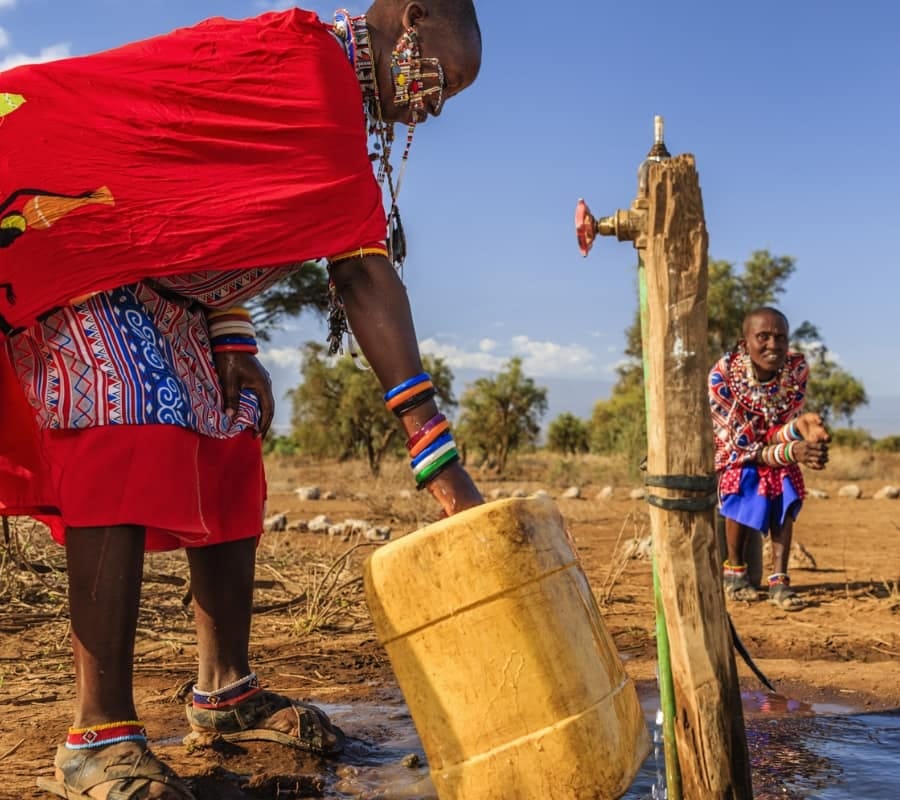
water scarcity
Inadequate water sources and supply facilities
prevent local people from accessing
sufficient safe water for domestic use. -
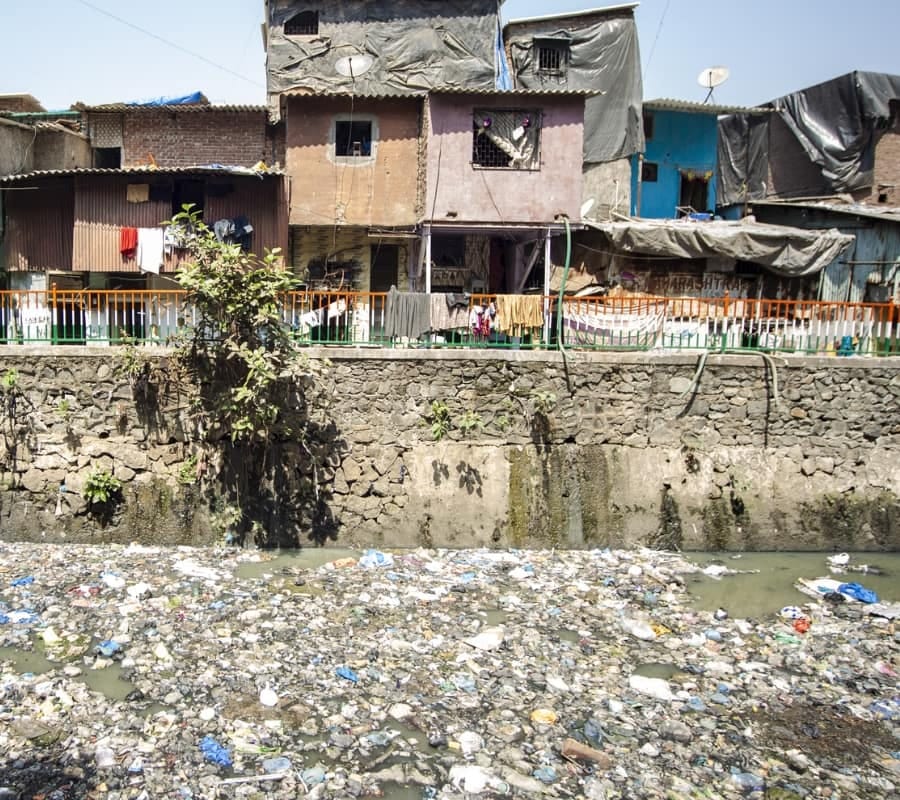
water pollution
Domestic wastewater is not properly treated,
contaminating precious water resources
such as rivers and groundwater. -
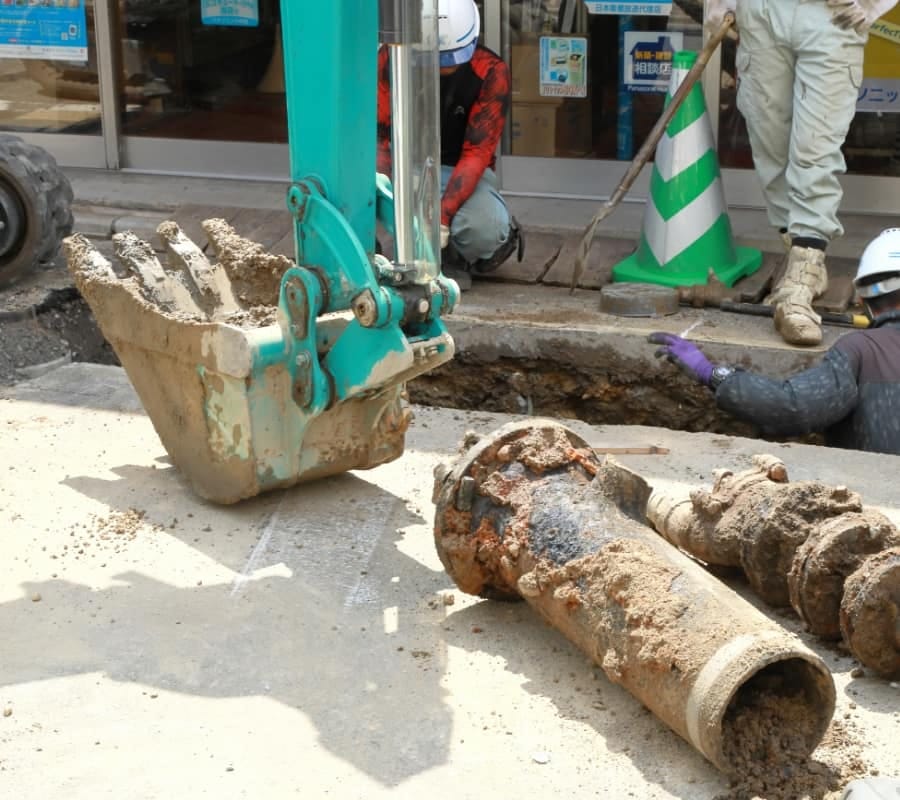
deterioration of water
supply financesMaintenance costs of water treatment facilities
and pipeline networks increase,
putting pressure on national and regional finances.
technology
Instantly turning used water
into ‘usable water’:
‘Small-scale water
regeneration systems’
To take on this formidable challenge facing humanity, WOTA has focused on an approach called “regenerative water reuse.” The conventional water-supply-and-sewerage model is one in which water is drawn from natural sources, and domestic wastewater is treated and discharged into rivers or the sea.
By contrast, we have devised a circular water-use model that treats wastewater as the most accessible water source and regenerates it into household water for repeated use. At the core is our proprietary technology: autonomous water-treatment control that leverages sensors and data science. This enables the innovative on-site, closed-loop use of water that was previously difficult to achieve.
We are developing the “small-scale, decentralized water regeneration system.”

solution
Transforming society by
starting with solving local water issues:
‘small -scale decentralized
water infrastructure’
WOTA’s goal is a “best mix” of water infrastructure—achieved by appropriately combining large-scale, centralized infrastructure (water supply and sewerage) with small-scale, decentralized infrastructure in line with local geography and demographic conditions—so that it becomes environmentally and economically sustainable.
With our Small-Scale, Decentralized Water Regeneration System, which turns wastewater into household-use water, people can be freed from water stress—even in situations where water supply and sewerage services are brought to a halt by disasters.
This device collects all household wastewater, so there is no risk of polluting rivers or the sea. It also eliminates the need to spend enormous sums extending water networks into areas with extremely low population density, freeing up resources to invest in the future—through education, social welfare, and solutions to environmental challenges.
In this way, the Small-Scale, Decentralized Water Regeneration System has the potential to address “the water problem”—one of modern society’s toughest challenges—from the ground up, by solving water-related issues for each household and community, one by one.
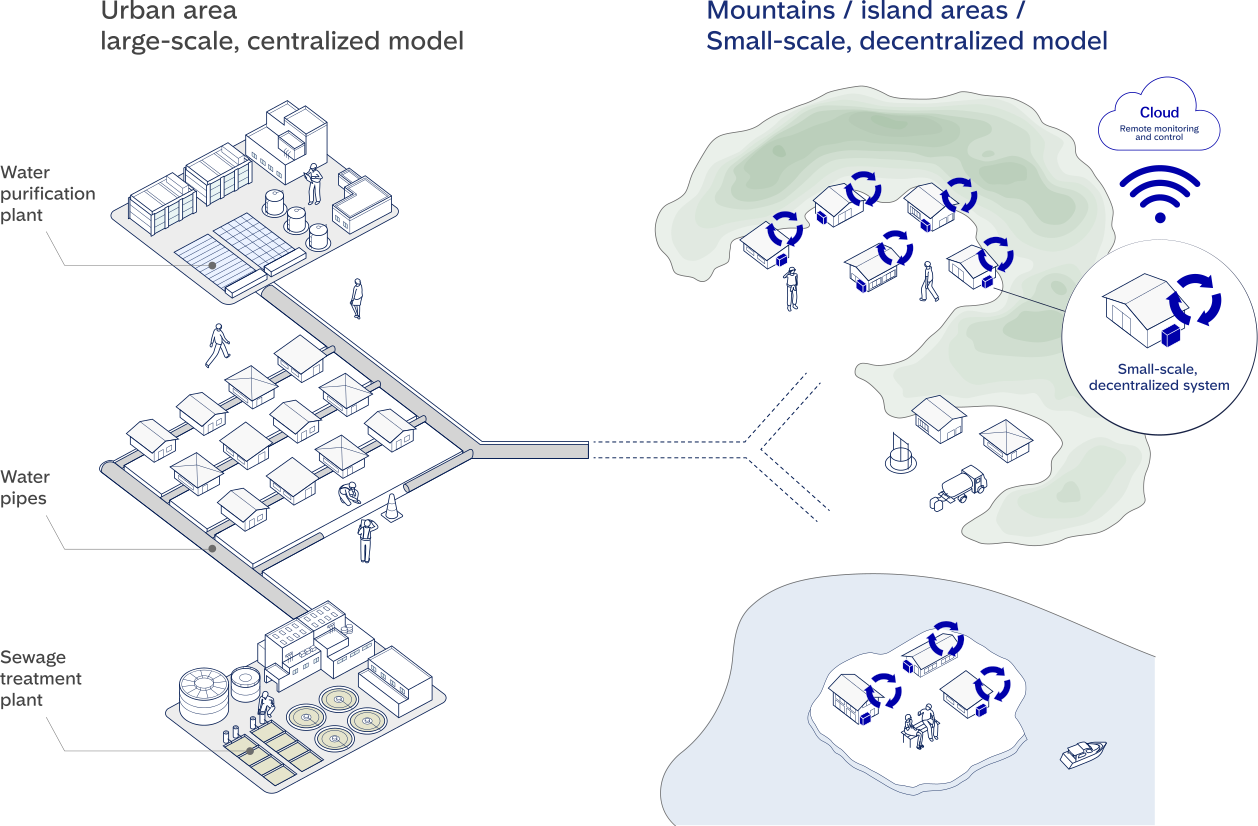
 master plan concept and roadmap for solving water problems